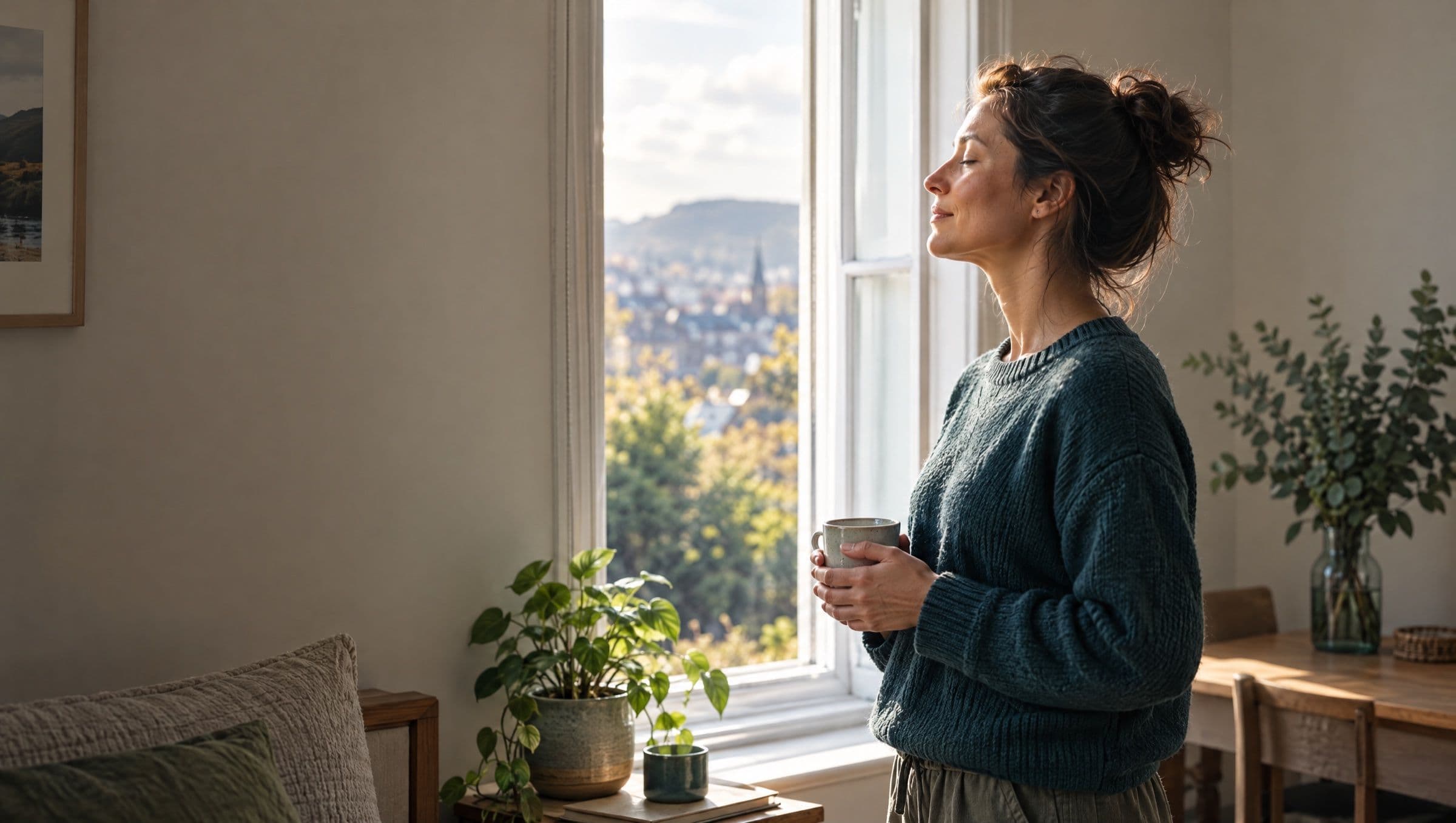
Small, repeatable changes can help you feel steadier. You do not need to transform your entire life overnight.
Anxiety can make life feel smaller. It can affect sleep, appetite, concentration, confidence and your willingness to go outside or connect with other people. When that happens, it is tempting to search for one perfect fix.
Real change is usually less dramatic. It comes from helpful actions repeated often enough to become familiar. These ideas are not a test, and you do not need to attempt them all at once. Choose one that feels possible, use it consistently and build from there.
Start small: One repeatable action is more useful than an ambitious plan you abandon after two days.
Consistency is the multiplier
Anxiety knows how to be consistent. It can turn up day after day, repeat the same warnings and persuade you that one difficult moment means nothing has changed. Borrow that persistence for yourself. Keep practising the behaviours that move you forward, even when progress feels slow.
A wobble does not take you back to square one. It is part of change, not proof that change has failed. Consistency matters far more than perfection.
Move in a way that works for you
Physical activity can reduce built-up tension, support your mood and give anxious energy somewhere useful to go. That does not mean you need an intense workout or an expensive gym membership. Walk to the end of the street, stretch at home, try yoga or Pilates, take the stairs, dance to one song or join a class you might enjoy.
Start from where you are rather than where you think you should be. A manageable amount that you repeat is better than forcing too much and giving up. If you have a health condition, injury or have been inactive for a long time, get suitable professional advice before making a major change.
Eat regularly and reduce the sugar rollercoaster
Anxiety can disrupt appetite and make quick-energy food feel tempting. Food should not become another source of fear or guilt, but irregular meals and repeated energy crashes can leave you feeling more unsettled. Aim for regular, balanced meals and notice whether high-sugar, highly processed snacks make your energy or mood less steady.
Keep the change practical: cook one meal from scratch, add fruit or vegetables, drink more water or involve the family in preparing something together. The aim is not a perfect diet. It is a more supportive routine.
Make room for real laughter
When anxiety has been present for a long time, laughter can disappear or become something you perform so people stop asking whether you are all right. Give yourself opportunities for genuine enjoyment instead. Watch a favourite comedy, go to a comedy night, speak to the friend who makes you laugh or revisit something that has lifted you before.
The point is not to force happiness. It is to create moments in which anxiety is not the only thing receiving your attention.
Create moments of calm
Yoga, meditation, steady breathing and simple relaxation can help you notice tension and settle your body. You do not need special equipment or a perfectly quiet mind. Dim the lights, sit somewhere comfortable, play something gentle and take a few slower breaths.
Two calm minutes still count. With repetition, the act of pausing becomes more familiar and easier to return to when anxiety rises.
Get outside in daylight
Daylight helps support the body's sleep-wake rhythm, while going outside can also add movement, fresh air and a break from the same four walls. Try to spend some time outside during the day when you can.
If leaving home feels difficult, make the first step smaller: stand at an open door, sit near a window, walk to the gate or spend a few minutes in the garden. Build from the point that is manageable for you. Daylight can support wellbeing, but it is not a replacement for treatment when treatment is needed.
Protect your sleep routine
Anxiety and overthinking often become louder at night. Rather than demanding perfect sleep, build a predictable wind-down routine. Try to go to bed and get up at broadly consistent times, reduce caffeine later in the day and step away from screens before bed if they keep you alert. Reading, gentle breathing or quiet audio may help you settle.
Do not turn sleep into another battle. If you cannot sleep, move somewhere comfortable and do something relaxing until you feel sleepier, then return to bed.
Step back from social media
Social media was designed to connect us, but a large part of modern feeds is now advertising, comparison, argument, bullying and carefully edited versions of life. When you are already anxious, that constant input can keep your attention fixed on other people's opinions and make your own progress harder to see.
Give yourself permission to step away. You might remove the apps for a week, suspend an account, mute people who leave you feeling worse or decide on specific times to check messages. This is not weakness. It is a boundary that gives you space to focus on your own wellbeing.
You will survive without the feed, and you may be surprised by how much mental space returns. You can come back when you feel ready - with clearer limits around what deserves access to you.
Release physical tension
Anxiety often shows up in the body: tight shoulders, a clenched jaw, shallow breathing or a heavy feeling in the chest or stomach. Massage cannot cure anxiety, but professional massage, self-massage, gentle stretching or a warm shower may help release some of that tension and create a useful pause.
Choose something safe and comfortable for you. The value is not in chasing a chemical result; it is in helping your body experience a moment that feels less guarded.
Make helpful routines familiar
Familiarity can reduce the number of decisions you have to make when your mind is already busy. Create a few reliable anchor points in your day: a regular waking time, meals, movement, a short reset and a wind-down routine. Write them down if that helps, or keep them simple enough to remember.
A routine should support you, not punish you. If a day goes off course, return to the next helpful action instead of writing the whole day off.
Choose one next step
Do not try to rebuild everything today. Pick one idea that feels achievable, decide when you will do it and repeat it for long enough to learn whether it helps. Once it becomes familiar, add the next.
Reflect: Which one change feels most realistic for you this week, and what is the smallest first step you could take?
Try a related technique
Double In, 7 Out offers a short, guided breathing reset when your body feels activated. Havening uses gentle, repetitive touch to help you slow down and feel more settled. Both are available in The Mullins Method's Quick Techniques library.
Important: Self-help can support recovery, but it is not a substitute for professional care. If anxiety is persistent, worsening or interfering with daily life, speak to your GP or NHS Talking Therapies. If you or someone else is in immediate danger, call 999 or go to A&E. Samaritans are available free on 116 123.
Sources and original article
Written by Kevin Mullin and adapted for The Mullins Method app. The practical guidance was reviewed against current UK public-health information.